Four Years Later: I Finally Finished The Well of Souls
What happens when you spend four years inside the same story?
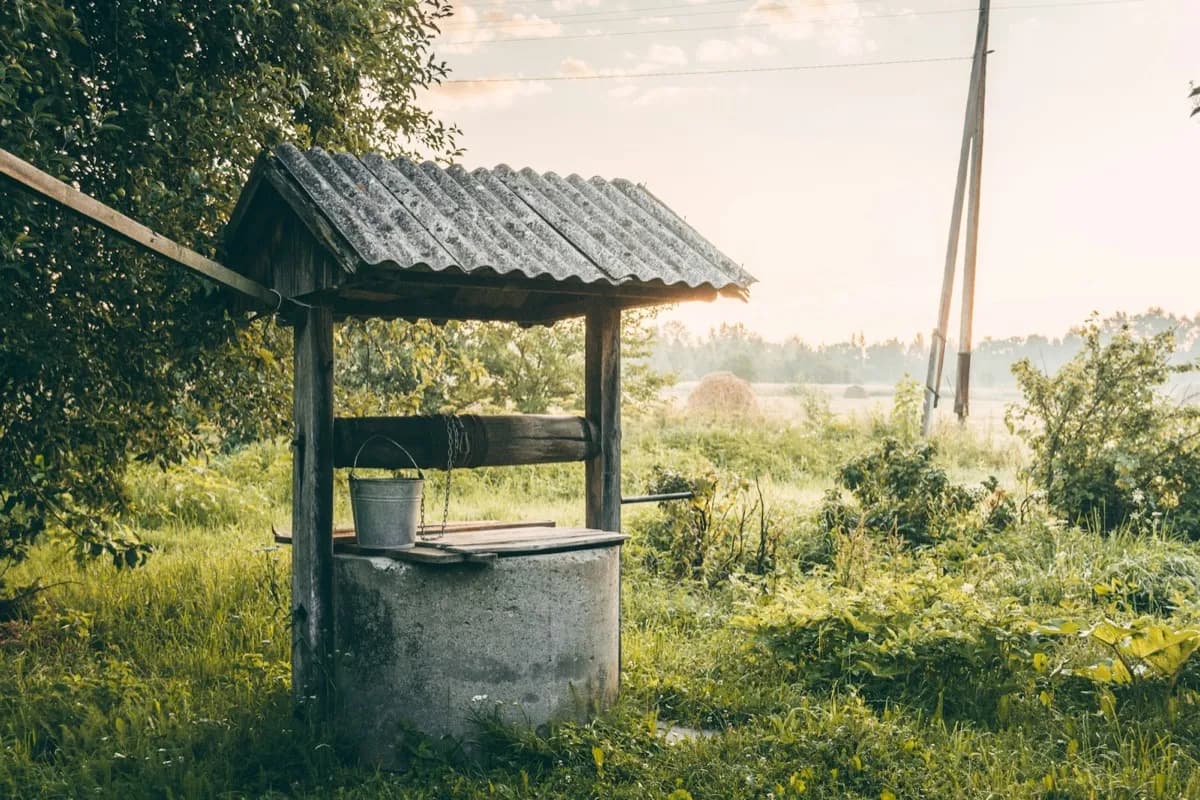
I have a confession to make. For most of the past four years, The Well of Souls has been the book I was always working on and never quite finishing. Portal fantasy about a lonely programmer who dies unexpectedly and wakes up in a world between worlds, the only soul who remembers his former life. A creeping darkness, a well on a meadow, a tree with blood-red leaves, and questions about purpose, memory, and what it means to be remembered.
It sounds compelling when I describe it like that. It should. I've had four years to refine the pitch. But finishing it was one of the most rewarding things I've done as a writer, and also one of the heaviest. The last stretch felt less like creative flow and more like dragging a boulder uphill while trying to remember why you picked it up.
The Book That Wouldn't End
I started The Well of Souls in 2022 with the kind of energy only a new project can give you. The protagonist's voice came easily. The world between worlds opened up like a door I hadn't known was there.
Then life happened. Inktober gave me a complete children's book in a month. Blog posts needed writing. The daily job needed doing. The Well of Souls didn't die, but it kept getting pushed to "tomorrow." And tomorrow, as my protagonist might tell you, is a dangerous word.
Over four years, I wrote in bursts. Some months I added thousands of words. Some months I opened the manuscript, changed a comma, and closed it again feeling like I'd accomplished something. I hadn't.
The manuscript grew to roughly 78,000 words across nearly forty chapters. That should have felt like progress. Often it just felt like evidence that I had been at this a very long time without reaching the end.
When You Go Blind to Your Own Words
The hardest part wasn't writer's block. It was something worse: familiarity.
When you've read the same chapter fifteen times, you stop seeing what's actually on the page. You see what you meant to write. You skim past awkward sentences because your brain autocorrects them. You miss the scene that drags because you've already lived through it in your head a hundred times.
I became blind to my own text.
It's not that the work is bad. It's that you've spent so long inside it that you've lost the ability to read it the way a reader would. The story you once loved starts to feel like homework.
There were weeks when I dreaded opening the document. Not because I didn't care about the book, but because I couldn't trust my own judgment anymore. Was this chapter actually boring, or was I just tired of it? That uncertainty is exhausting.
What Four Years Taught Me
I'm not going to pretend I emerged with all the answers. But I did learn things I couldn't have learned from a shorter project.
Distance is not optional; it's a tool. The chapters I revised after stepping away for a month were almost always better than the ones I polished in daily marathons. Your brain needs time to forget what you intended so it can see what you wrote.
Writing and finishing are different skills. I was good at generating scenes and building worlds. What I had to learn, painfully, was how to keep going when the magic faded. Finishing requires a stubbornness that has nothing to do with inspiration.
You can't hold the whole book in your head. Trying to see every thread at once made me paralyzed. What worked was narrowing the scope: one chapter, one scene, one problem at a time.
Revision has seasons. Some passes were for cutting. Some for continuity. Some for dialogue only. Treating every session as "fix everything" was a recipe for burnout.
Momentum beats perfection. The Thirty30k challenge in February pushed me to write a thousand words a day, and that rhythm did something months of tinkering couldn't: it reminded me that forward motion is its own kind of fuel.
The End (For Now)
A couple of months ago, I wrote the final scene. The well on the meadow. The tree with red leaves. A new soul waking up not knowing where he is, but feeling, somewhere deep, that he's in the right place.
I sat there afterward for a long time. More like exhaling after holding your breath for four years than celebrating.
This is a first draft. There's editing ahead, and probably more blindness, and scenes I'll read a dozen more times. But the story has an ending now. The book exists as a whole thing, not an endless promise. That matters more than I expected.
If you're circling the same chapters, wondering if you've lost the thread: you probably haven't. You might just be too close to see it. Finish the messy version first. You can make it beautiful later.
The Well of Souls took me four years. I wouldn't recommend the timeline. But I wouldn't trade what I learned for a faster one, either.
Are you working on a long-term writing project? I'd love to hear about it. Send me a message on Instagram @stories.by.lauri!